fascinating review of studies on Internet use and cognition — including potentially negative effects on concentration and memory — found by way of an excellent article in Nautilus titled "Viva la library"
Feed
“Viva la Library!”
But while few parts of the world remain outside its reach, the internet leaves little room for discovery. Our curiosities in the digital environment are not so much sparked as they are confirmed. The system is designed to say “yes” to us, not challenge us. Over time, even the questions we ask begin to take on the smooth, antiseptic quality it was designed to reward. Digitalization has driven us further into ourselves and sects of the like-minded.
But at Google’s heart was a Faustian bargain. Access to a bottomless well of knowledge would come at the cost of us becoming a thinly anonymized data point, the contents of our searches surveilled and transformed into rocket fuel for Google’s online advertising empire. The longer we linger online and follow links, the more monetizable breadcrumbs we leave, and the more eerily personal the advertisements become.
- quoting
- “Viva la Library!”
- discuss
- your site
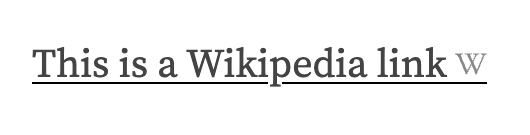
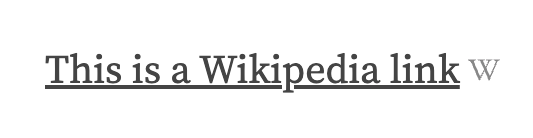
all i want for christmas is CSS support for underlines to extend below SVG pseudoelements 😔 (as in the first image)
- tags
- #css
I have a new article out today in Businessweek: "The State of Crypto Is Anything But Strong" (gift link).
I think this is the first time any of my writing has earned its own animated illustrations, which I am just delighted about.

- tags
- #crypto
If you've ever found yourself missing the "good old days" of the web, what is it that you miss? (Interpret "it" broadly: specific websites? types of activities? feelings? etc.) And approximately when were those good old days?
No wrong answers — I'm working on an article and wanted to get some outside thoughts.
- tags
- #web
Former Binance CEO Changpeng Zhao has been sentenced to four months in prison.

Avraham Eisenberg, the person who was just found guilty of exploiting the Mango Markets crypto project, has now been charged with possession of child sexual abuse material.

this is not altogether surprising, given an august 2023 filing in his market manipulation case that disclosed that the FBI had found CSAM while searching a cell phone of his in relation to his crypto theft
silver lining: it was awfully thoughtful of all these boston college administrations to draw the attention of a group of young, energetic, politically active students to last year's "tent ordinance" that cruelly targets the unhoused and is now being used to crack down on speech
interesting, Roger Stone deleted one of his tweets shilling a "MAGA Memecoin" after I pointed out that these tweets likely violate SEC rules
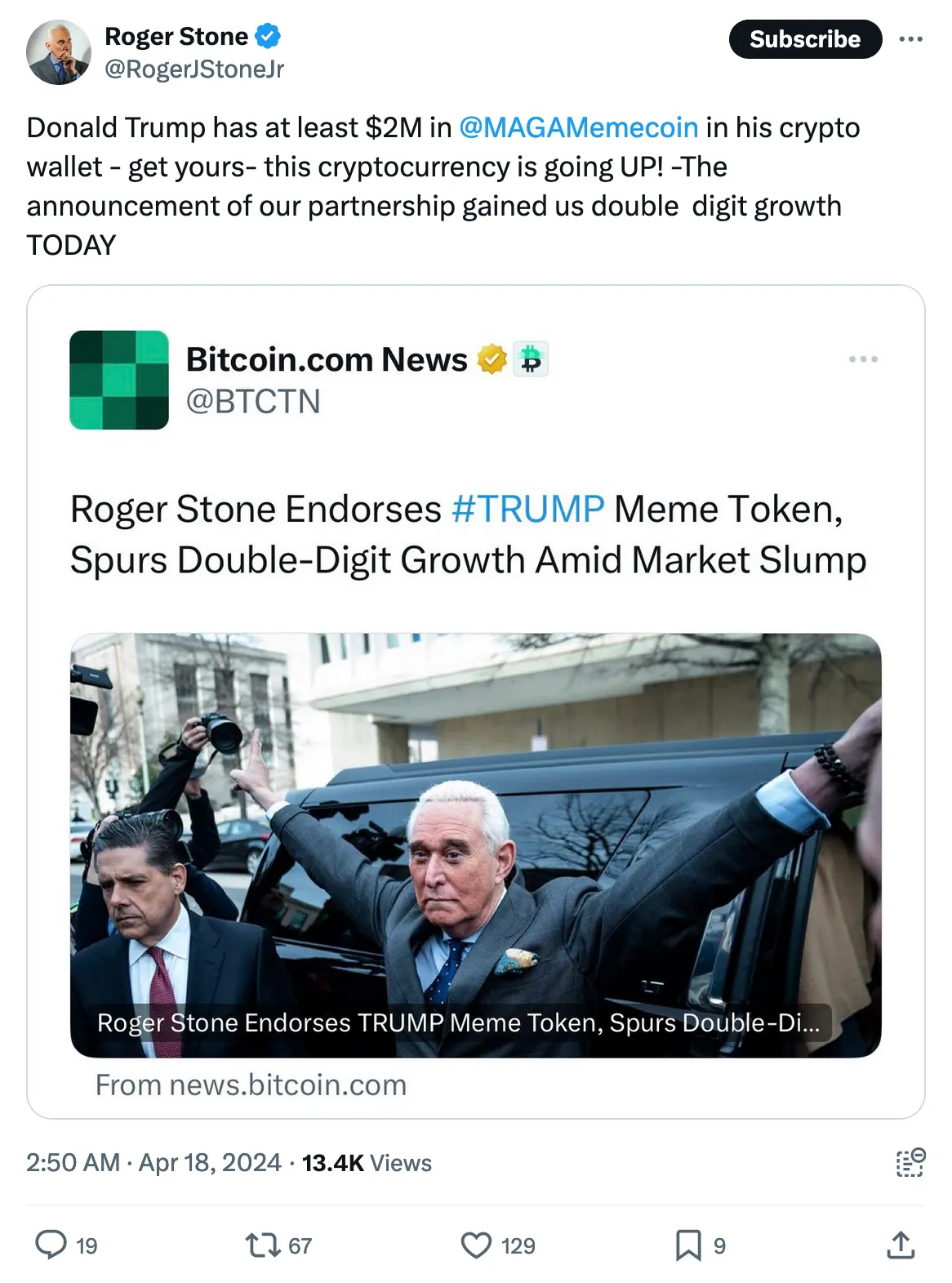
most of his other promo tweets remain, though, and have similar issues
took me a few attempts to say "bitcoin memecoins" in my newsletter voiceover without saying "beancoins", but I think I may be on to something here