Short thoughts, notes, links, and musings by Molly White. rss
Quoted
There’s people who are really angry about a lot of tech stuff who disagree with each other about everything, including whether or not they really even have a problem. But all of their problems start with the fact that there’s a lot of commercial surveillance. So these people might disagree about everything else, but they will agree that their problem could be solved if we could do something about commercial surveillance.
So if you think Mark Zuckerberg made grampy into a QAnon, or if you think Insta made your teenager anorexic, or if you think that TikTok is convincing millennials to quote Osama bin Laden, right? Or if you think that it’s ugly that red state attorneys general are following teenagers into out-of-state abortion clinics, or that Google reverse warrants reveal the identity of everyone in a black lives matter demonstration or for that matter, the January 6th riots, or if you are worried about deep fake porn, or if you’re worried that people of color are having the surveillance data captured about them mobilized to discriminate against them in employment and financial products, right? All of these different things all start with cutting off the supply of surveillance data.
Coinbase’s “Stand With Crypto” PAC claims to have raised $87 million, but their donations list totals up to only $1,176,900. They seem to be double-counting corporate contributions to super PACs to overstate how much their “community” supports this supposedly grassroots project.
As usual, Mike Masnick is spot on about why the recent bill to "sunset" Section 230 is one of the most harebrained things to come out of Congress recently.
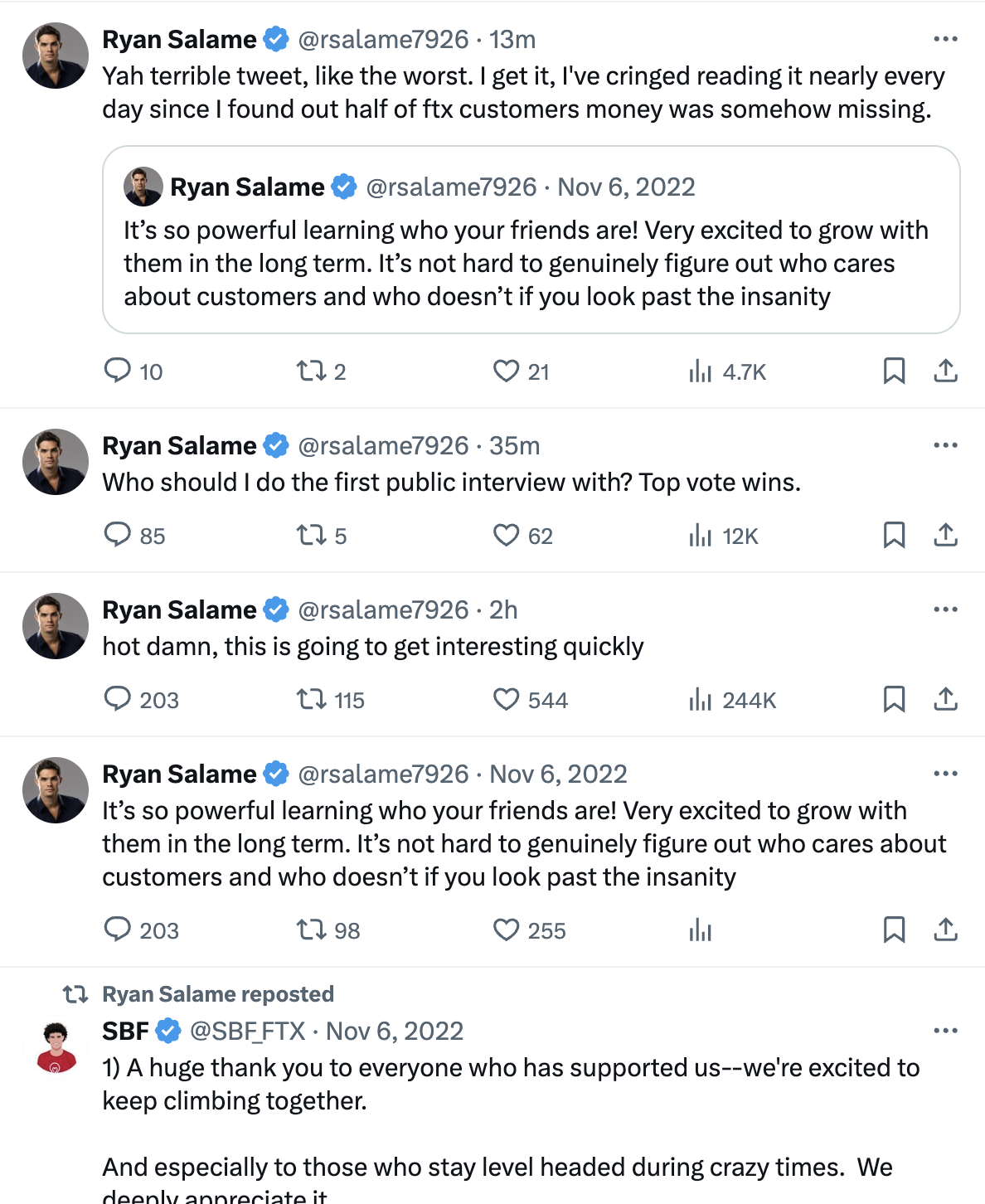
FTX's Ryan Salame has returned to Twitter for the first time since FTX collapsed — hours after he was sentenced to 7.5 years in prison for his role in the FTX fraud and for his illegal campaign contributions 💀
just realized i've had the mollywhite.net domain for over 10 years(!!)
related sneak peek into an upcoming piece: i firmly believe that if you're going to spend money on one thing online it should be a domain, particularly as online identity gets more fragmented. as platforms come and go, you can always find me there.
"it's all stored locally" is not a panacea for these alarming privacy-invading products!
what exactly is stored locally? what data is extracted from that local data and sent to the company's servers? is that local data being backed somewhere?
what additional risks are now being posed to people who share devices, whose devices might be accessed by others or compromised, or who might not realize these tools are running? what is the risk that the company might later change its decision on local storage?