Here's the problem: establishing that AI training requires a copyright license will not stop AI from being used to erode the wages and working conditions of creative workers. The companies suing over AI training are also notorious exploiters of creative workers, union-busters and wage-stealers.
Telling creative workers that they can solve their declining wages with more copyright is a denial that creative workers are workers at all. It treats us as entrepreneurial small businesses, LLCs with MFAs negotiating B2B with other companies. That's how we lose. On the other hand, if we address the problems of AI and labor as workers, and insist on labor rights – like the Writers Guild did when it struck last summer – then we ally ourselves with every other worker whose wages and working conditions are being attacked with AI. Our path to better working conditions lies through organizing and striking, not through helping our bosses sue other giant multinational corporations for the right to bleed us out.
One flaw of the LLMs I've used: they will never give you harsh criticism. While it would be nice to think all my writing is just that good, I know there are no circumstances where someone will ask for feedback and it will say “throw the whole thing out and start again.”
Here are some prompts I'm using as I experiment with LLMs1 to see if they can help refine a draft of a talk I'm writing.
M: Here is a draft of a talk I wrote: <draft> It feels a bit scattered and disorganized to me. Please help me clean it up.
LLM: You've got a compelling narrative and some valuable insights here. However, it could be more tightly organized and concise for better impact. Here’s a revised and more structured version of your talk: <clip>
M: Rather than rewriting it, can you just identify some flaws with the existing piece and recommendations for how to improve it? I don't want to reduce the length much, but I am happy to cut some pieces and add different lines of thought.
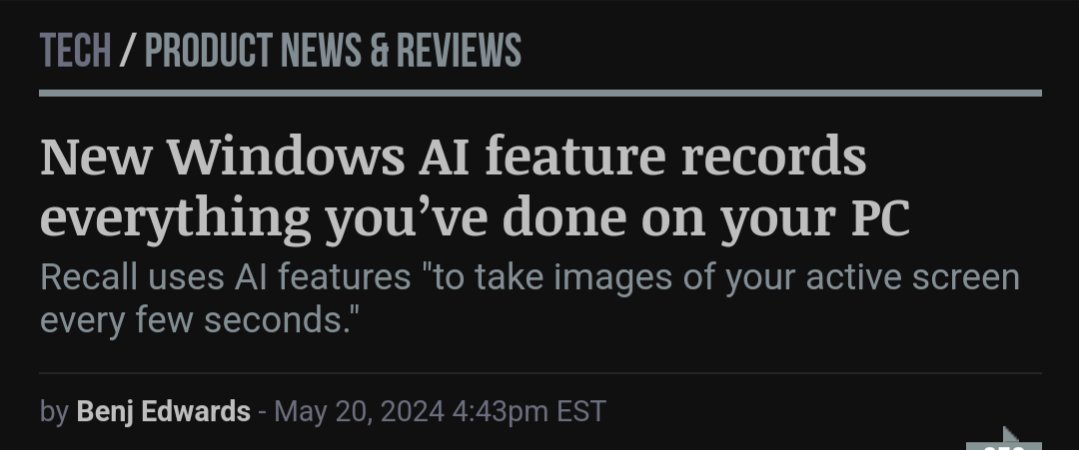
"it's all stored locally" is not a panacea for these alarming privacy-invading products!
what exactly is stored locally? what data is extracted from that local data and sent to the company's servers? is that local data being backed somewhere?
what additional risks are now being posed to people who share devices, whose devices might be accessed by others or compromised, or who might not realize these tools are running? what is the risk that the company might later change its decision on local storage?