i never realized that "getting lit", as in getting drunk, dates back at least to the 1930s
“You could have phoned him last night.” “I could not. I got lit last night. This is the first job I’ve had in a month.” “Got any expense money left?” “Enough for a couple of days. I’ve learned self-control.”
“How drunk are you?” “Hell, how do I know?” Wolfe’s brow lifted. “Gentlemen?” Farrell said, “Mike’s all right. Forget him. He’s all right.”
Julius Adler the lawyer, about the build of a lead-pencil stub, looking like a necktie clerk except for his eyes and the way he was dressed, put in, “I would say yes. We realize that this is your house, Mr. Wolfe, and that Mr. Ayers is lit, but after all we don’t suppose that you invited us here to censor our private habits. You have something to say to us?”
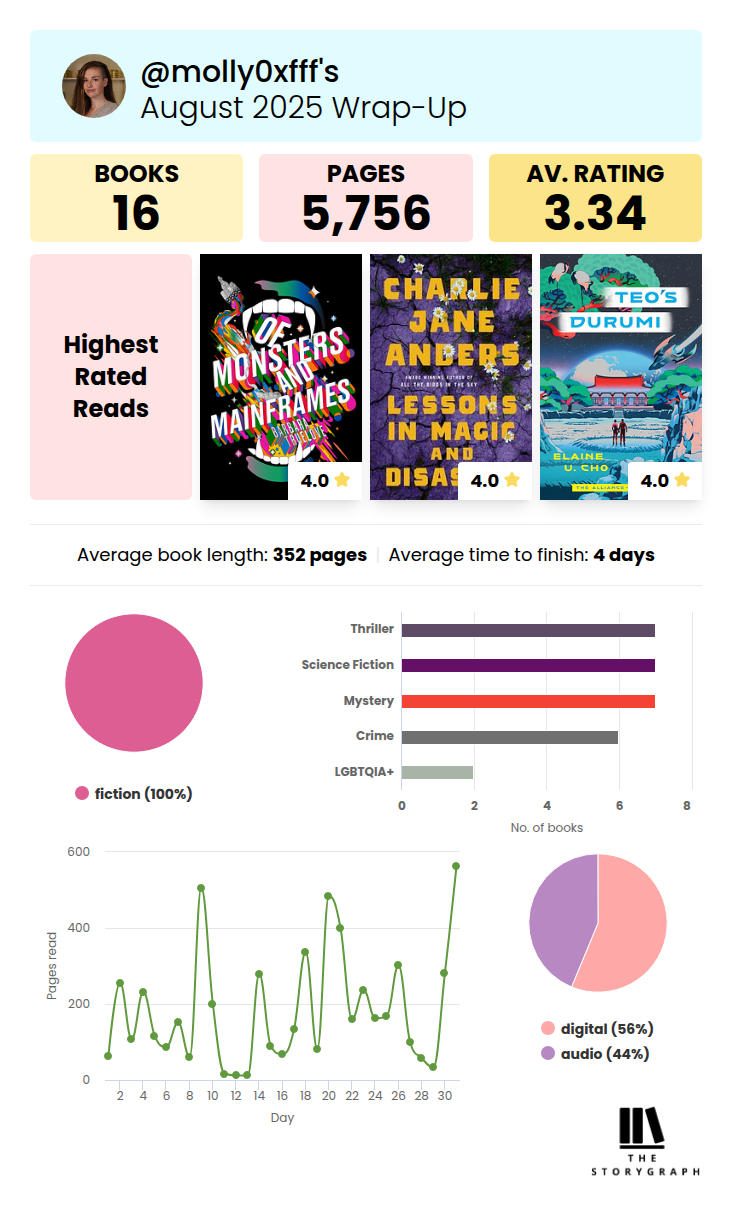
Highlights included Of Monsters and Mainframes by Barbara Truelove, The Alliance series by Elaine U. Cho, and Charlie Jane Anders' Lessons in Magic and Disaster.
I’ve spent the better part of two decades dealing with people trying to dox and harass the volunteers who make Wikipedia the incredible resource it is today.
Justin Sun has just filed a lawsuit against Bloomberg, claiming they plan to “recklessly and improperly disclos[e] his highly confidential, sensitive, private, and proprietary financial information,” which he gave to them while they were verifying his assets for inclusion in the Bloomberg “Billionaires Index”.
Sun claims this will cause him “significant and irreparable harm—both financially and physically.” He says they plan to use the information in an article unrelated to the Billionaires Index. He also claims they plan to publish “granular details about his cryptocurrency assets, including a breakdown of his cryptocurrency holdings,” in the Billionaires Index, and that he wouldn’t have agreed to share the information had he known.
Sun sent a cease and desist to Bloomberg, and was informed they still intend to publish. He now seeks an injunction against the company.
Kevin de Patoul, chief executive of crypto market maker Keyrock, says investors should be realistic about what this is. “You’re injecting a huge amount of risk into a system that, in the end, has almost nothing backing it except the continued appreciation of the asset.”
In ShopTalk, Chris and Dave talked about my recent post about RSS, and the curation challenge posed by RSS when you mix together high-volume feeds like The Verge with more infrequent posters (solo bloggers, etc).
This is partly why I have a "news" feed that's separate from my "newsletters" feed in my blogroll: the "news" feed is typically for high-volume outlets with multiple writers who publish multiple times a day, whereas newsletters tend to be solo or small groups of writers publishing ~weekly.
By separating them, I avoid ~weekly posters getting drowned out in a firehose of more frequent news. It's a little more up-front curation, but it works well!