It’s been two weeks since Coinbase disclosed its data breach, and so far we’re up to:
• 8 customer class actions against Coinbase • 1 shareholder class action against Coinbase • 1 customer class action against TaskUs, a contractor the plaintiffs allege was responsible for the breach.
Crypto industry-funded polls have claimed that as much as 28% of American adults currently owned crypto in 2024. Coinbase in particular loves to throw around claims of 20%.
Federal data has just come out putting the figure at... 8%.
Legislators and regulators are frequently relying on the crypto industry’s own inflated figures to justify their actions, and the crypto industry has used the supposed existence of all these “crypto voters” as a cudgel to threaten legislators.
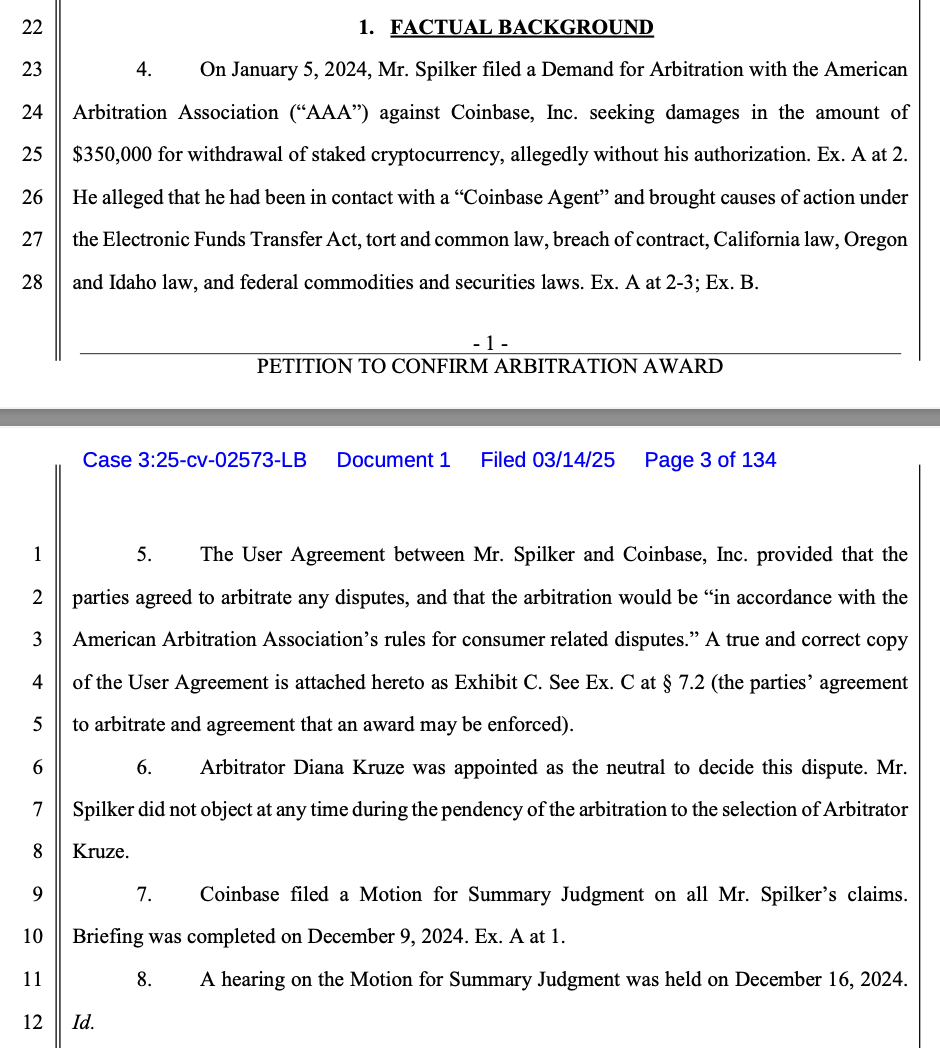
Given the recent data breach and Coinbase’s user agreement that aims to force customers into arbitration rather than individual or class action lawsuits, it’s interesting to read the outcome of a recent arbitration case against Coinbase.
A Coinbase data breach filing with the Maine Attorney General finally gives us some more detail than Coinbase’s vague “less than 1% of monthly transacting users”. 69,461 people were affected, and Coinbase says the data breach occurred on December 26, 2024.
It took them almost five months between the incident and the incident disclosure, although the company has since admitted it knew customer support agents were suspiciously accessing customer data as far back as January.
Security researchers who have spent months trying to call Coinbase’s attention to serious issues at the company are disputing Coinbase’s claims about the timing of the breach. “Threat actors had ongoing access via multiple insiders over a prolonged period of time.”
The SEC has just filed a lawsuit against Unicoin, its CEO, and promoters, accusing them of “a massive securities offering fraud” amounting to more than $100 million. The SEC had reportedly previously tried to negotiate a settlement, but Unicoin refused it.
The SEC warned Unicoin of impending civil charges in December 2024, after the company decided after Trump’s election that they would breach a standstill agreement they’d entered with the agency.
[I]n regard to cash deposits, the stablecoin investors will have priority over the claims of ma-and-pa for their bank deposits (and thus over the FDIC's subrogation claim when it pays ma-and-pa).
Yes, you read that correctly: Congress is about to put the claims of stablecoin investors ahead of ma and pa's bank deposits. That's just stunning. Now ma-and-pa's deposits are FDIC insured, so they'll be alright, but it means the FDIC's Deposit Insurance Fund is footing the bill. In other words, the GENIUS Act is subsidizing stablecoin issuance on the back of bank deposits. By subordinating the FDIC's subrogation claim in a bank insolvency to the claims of stablecoin investors, the GENIUS Act is effectively letting FDIC insurance leak out to cover uninsured stablecoins, without any insurance premiums paid.
Coinbase was aware that support reps were suspiciously accessing customer data when its CEO tweeted that the CFPB should be "deleted". Among other things, the CFPB has pursued legal action against financial companies that failed to secure sensitive customer data.